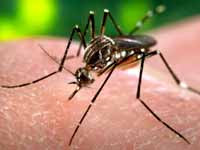
KUALA LUMPUR, Oct. 10- Dengue cases have doubled over the past 10 years, with the situation turning significantly worse this year compared with the previous year, a health official said.
The disease has in fact become the fastest-growing mosquito- born disease in the world, Shin Young-soo, World Health Organization (WHO) Regional Director for the Western Pacific, told a press conference here on Sunday.
While the reason for the deteriorating situation was unknown, Shin said it could be caused by rising temperature, rain amount and urbanization.
However, the increasing number recorded could be due to better surveillance developed over the years, said Shin.
While pointing out that the dengue situation has worsened over the last three years in Malaysia, Shin also said that the Philippines and Laos were severely attacked by the disease this year.
According to the Malaysian Health Ministry, a total of 37,419 dengue cases were reported in the country from January to Oct. 2, an increase of 17 percent or 5,411 cases compared with 32,008 cases recorded in the same period last year.
During the period, 117 death cases were reported, a surge of 65 percent or an increase of 46 cases compared with the same period last year.
Earlier this week, the WHO warned that 2.5 billion people around the globe are estimated to be threatened by the fatal disease, with 70 percent of the cases originating from Asia.
According to the WHO, many dengue cases were reported in Southeast Asian and South Asian countries during the first eight months of 2010, with 60,000 cases recorded in Indonesia, 58,000 in Thailand and 27,000 in Sri Lanka.
Meanwhile, Malaysian Health Minister Liow Tiong Lai said that the ministry had obtained the approval from the Malaysian National Biosafety Board to release the genetic-modified mosquitoes into the environment.
The Malaysian government is researching on the possibility of using genetic-modified mosquitoes to eradicate the spread of dengue, a way deemed most effective and fast in reducing dengue cases.
According to the ministry, the genetic-modified mosquitoes, all male, will still mate with other female mosquitoes but the wigglers, or mosquito larvaes, will not be able to survive.
Saturday, October 16, 2010
Saturday, January 2, 2010
A/H1N1 pandemic death toll rises to 12,220, says WHO
GENEVA, Dec. 30 (Xinhua) -- The global death toll of the A/H1N1 pandemic influenza has risen to at least 12,220, an increase of over 700 in a week, the World Health Organization (WHO) said in a weekly update on Wednesday.
The death toll in the Americas remains at some 6,670, with no new deaths reported in the past week. But more deaths were recorded in all the other five regions, notably in Europe and the Western Pacific, the UN agency said.
According to the WHO's tally, A/H1N1 pandemic deaths in Europe increased more than 300 from a week ago, reaching at least 2,422, while the number of deaths in the Western Pacific rose to 1,249, from 1,030 last week.
The pandemic death numbers in South-East Asia, East Mediterranean and Affica increased to 1,056, 693 and 130 respectively.
The reported number of fatal cases is an under representation of the actual numbers as many deaths are never tested or recognized as influenza related, the WHO has noted.
The H1N1 flu virus was first identified in North America in April, and the WHO declared the new influenza as a pandemic in June. So far the virus has caused infections in more than 208 countries and overseas territories or communities.
WHO Director-General Dr Margaret Chan warned on Tuesday that the A/H1N1 pandemic influenza is not over yet and the world needs to continue monitoring the evolution of the disease in 2010.
Although the pandemic has passed its peak in many countries in the northern hemisphere, notably in the United States, Canada and parts of Europe, but "it's too premature, too early for us to say we have come to an end of the pandemic influenza worldwide," Chan told a press conference in Geneva.
She said the WHO and its members states should continue to monitor the evolution of this pandemic for the next six to 12 months, given the fact that flu viruses change constantly and the current "moderate" pandemic could become more fatal.
The death toll in the Americas remains at some 6,670, with no new deaths reported in the past week. But more deaths were recorded in all the other five regions, notably in Europe and the Western Pacific, the UN agency said.
According to the WHO's tally, A/H1N1 pandemic deaths in Europe increased more than 300 from a week ago, reaching at least 2,422, while the number of deaths in the Western Pacific rose to 1,249, from 1,030 last week.
The pandemic death numbers in South-East Asia, East Mediterranean and Affica increased to 1,056, 693 and 130 respectively.
The reported number of fatal cases is an under representation of the actual numbers as many deaths are never tested or recognized as influenza related, the WHO has noted.
The H1N1 flu virus was first identified in North America in April, and the WHO declared the new influenza as a pandemic in June. So far the virus has caused infections in more than 208 countries and overseas territories or communities.
WHO Director-General Dr Margaret Chan warned on Tuesday that the A/H1N1 pandemic influenza is not over yet and the world needs to continue monitoring the evolution of the disease in 2010.
Although the pandemic has passed its peak in many countries in the northern hemisphere, notably in the United States, Canada and parts of Europe, but "it's too premature, too early for us to say we have come to an end of the pandemic influenza worldwide," Chan told a press conference in Geneva.
She said the WHO and its members states should continue to monitor the evolution of this pandemic for the next six to 12 months, given the fact that flu viruses change constantly and the current "moderate" pandemic could become more fatal.

Sunday, December 6, 2009
India's swine flu toll reaches 606, over 19,000 affected
Six swine flu deaths, three of them in Rajasthan alone, were reported Friday, taking the toll from influenza A (H1N1) virus in India to 606, health authorities said here.
Also, a record 290 new cases were reported in the country, taking the total number of people affected with the contagious flu to 19,162.
With the three deaths, the toll in Rajasthan has gone up to 57. Two deaths were also reported from the national capital, taking the total toll in the Indian capital to 28.
One death was reported from Gujarat, taking the number of deaths due to Influenza A (H1N1) virus in the state to 47.
Meanwhile, Delhi reported 186 cases of swine flu Friday -- the highest for a single day - taking the number of people affected with the virus to 5,603. The national capital Thursday reported 176 cases of swine flu.
The number of people affected with the virus in Delhi is now the highest in the country.
'Till date, samples from 90,068 people have been tested for Influenza A (H1N1) in government laboratories and a few private laboratories across the country and 19,162 of them have been found positive,' said a statement issued here.
China reports fast rise of A/H1N1 flu deaths
The Chinese mainland saw a faster increase of deaths from the A/H1N1 influenza in the past weeks, according to the Ministry of Health. Among 200 deaths from the A/H1N1 flu, 194 were reported last month.
About 89.3 percent of all the flu cases reported last month were of the A/H1N1 strain, up 12.4 percent from the previous month, the health ministry said Friday.
As of Monday, nearly 27 million people nationwide had been inoculated with China-made A/H1N1 vaccine, according to the ministry.
Also, a record 290 new cases were reported in the country, taking the total number of people affected with the contagious flu to 19,162.
With the three deaths, the toll in Rajasthan has gone up to 57. Two deaths were also reported from the national capital, taking the total toll in the Indian capital to 28.
One death was reported from Gujarat, taking the number of deaths due to Influenza A (H1N1) virus in the state to 47.
Meanwhile, Delhi reported 186 cases of swine flu Friday -- the highest for a single day - taking the number of people affected with the virus to 5,603. The national capital Thursday reported 176 cases of swine flu.
The number of people affected with the virus in Delhi is now the highest in the country.
'Till date, samples from 90,068 people have been tested for Influenza A (H1N1) in government laboratories and a few private laboratories across the country and 19,162 of them have been found positive,' said a statement issued here.
China reports fast rise of A/H1N1 flu deaths
The Chinese mainland saw a faster increase of deaths from the A/H1N1 influenza in the past weeks, according to the Ministry of Health. Among 200 deaths from the A/H1N1 flu, 194 were reported last month.
About 89.3 percent of all the flu cases reported last month were of the A/H1N1 strain, up 12.4 percent from the previous month, the health ministry said Friday.
As of Monday, nearly 27 million people nationwide had been inoculated with China-made A/H1N1 vaccine, according to the ministry.
8,768 people worldwide have been killed by A/H1N1 influenza - WHO
GENEVA, Dec. 4 -- At least 8,768 people worldwide have been killed by A/H1N1 influenza, an increase of 942 in the past week, the World Health Organization (WHO) said in a latest update on Friday.
Of all the deaths, 5,878 occurred in the Americas, and at least 918 occurred in Europe. The other four WHO regions, South-East Asia, West Pacific, East Mediterranean and Africa reported 766, 706, 392 and 108 deaths respectively.
The H1N1 flu virus was first identified in North America in April, and the WHO declared the new influenza as a pandemic in June. So far the virus has caused infections in more than 207 countries and overseas territories or communities.
A/H1N1 influenza death toll rises to 8,768, says WHO
Currently A/H1N1 pandemic activity continues to evolve mostly in the cold northern hemisphere, with little activity reported in the southern hemisphere, the WHO said.
The early arriving winter influenza season continues to intensify across central Europe and in parts of central, eastern, and southern Asia. But disease activity has peaked and is declining in North America and has either recently peaked or is currently peaking in much of western and northern Europe.
In both Canada and the United States, influenza virus circulation remains active and geographically widespread. However, disease activity appears to have peaked in past three to four weeks, the WHO said.
In western and northern Europe the peak of disease activity has passed in Belgium, Iceland, Ireland, the Netherlands, Norway and parts of Britain (Northern Ireland, Wales). Activity may be peaking or plateauing in Spain, Portugal, Italy, Sweden and Denmark.
Influenza activity continues to increase in much of Central Europe in the region between the Baltic and Balkan countries and from Germany to Romania. In Eastern Europe, recent peaks or plateaus in disease activity have also been observed in Ukraine, Belarus, Bulgaria and the Republic of Moldova. In the Russian Federation, influenza activity remains active and intense in some regions, with an overall increasing trend.
In Western and Central Asia, influenza transmission remains active. Disease activity continues to increase in Kazakhstan, Kyrgyzstan, Uzbekistan, Iran and Iraq, while activity may have peaked in Israel, Jordan, and Afghanistan.
In East Asia, increasing influenza-like-illness or respiratory disease activity has been reported in southern China and Japan. A recent decline in activity has been observed in northern China.
In South and Southeast Asia, influenza activity continues to increase in the north-western parts of India, Nepal, Sri Lanka, and Cambodia, while activity in the rest of the region remains low.
At this point, it is still early to say whether pandemic activity is peaking in the northern hemisphere as a whole, and it is also not possible to predict what the situation will be like in the spring time, WHO's top flu expert Dr. Keiji Fukuda told reporters on Thursday.
Of all the deaths, 5,878 occurred in the Americas, and at least 918 occurred in Europe. The other four WHO regions, South-East Asia, West Pacific, East Mediterranean and Africa reported 766, 706, 392 and 108 deaths respectively.
The H1N1 flu virus was first identified in North America in April, and the WHO declared the new influenza as a pandemic in June. So far the virus has caused infections in more than 207 countries and overseas territories or communities.
A/H1N1 influenza death toll rises to 8,768, says WHO
Currently A/H1N1 pandemic activity continues to evolve mostly in the cold northern hemisphere, with little activity reported in the southern hemisphere, the WHO said.
The early arriving winter influenza season continues to intensify across central Europe and in parts of central, eastern, and southern Asia. But disease activity has peaked and is declining in North America and has either recently peaked or is currently peaking in much of western and northern Europe.
In both Canada and the United States, influenza virus circulation remains active and geographically widespread. However, disease activity appears to have peaked in past three to four weeks, the WHO said.
In western and northern Europe the peak of disease activity has passed in Belgium, Iceland, Ireland, the Netherlands, Norway and parts of Britain (Northern Ireland, Wales). Activity may be peaking or plateauing in Spain, Portugal, Italy, Sweden and Denmark.
Influenza activity continues to increase in much of Central Europe in the region between the Baltic and Balkan countries and from Germany to Romania. In Eastern Europe, recent peaks or plateaus in disease activity have also been observed in Ukraine, Belarus, Bulgaria and the Republic of Moldova. In the Russian Federation, influenza activity remains active and intense in some regions, with an overall increasing trend.
In Western and Central Asia, influenza transmission remains active. Disease activity continues to increase in Kazakhstan, Kyrgyzstan, Uzbekistan, Iran and Iraq, while activity may have peaked in Israel, Jordan, and Afghanistan.
In East Asia, increasing influenza-like-illness or respiratory disease activity has been reported in southern China and Japan. A recent decline in activity has been observed in northern China.
In South and Southeast Asia, influenza activity continues to increase in the north-western parts of India, Nepal, Sri Lanka, and Cambodia, while activity in the rest of the region remains low.
At this point, it is still early to say whether pandemic activity is peaking in the northern hemisphere as a whole, and it is also not possible to predict what the situation will be like in the spring time, WHO's top flu expert Dr. Keiji Fukuda told reporters on Thursday.
Friday, November 20, 2009
Second wave of A/H1N1 outbreak in Thailand and Malaysia
BANGKOK (Xinhua) -- The second round of the A/H1N1 influenza outbreak in Thailand has started, Public Health Minister Witthaya Kaewparadai said Thursday.
In the countryside the A/H1N1 virus is spreading in schools as the winter is affecting Thailand, the minister said.
Also, the people's gathering at festivals during the winter time has contributed to the second outbreak of the new flu, Witthaya said.
Hence, public health agencies nationwide have been instructed to strictly implement preventive measures for four months from November to February to curb the outbreak, he said.
These preventive steps include wearing a face mask, often washing hands, avoiding crowded places, and suspending working or class after developing flu-liked symptoms.
Students, working people, elders, and those with chronic diseases will be closely monitored, the minister said.
On Wednesday the Bureau of Epidemiology reported one more death case due to the A/H1N1 contraction, bringing the country's death toll from the new virus to 185.
Thailand had its first two confirmed patients on May 12.
H1N1 Situation in Malaysia
KUALA LUMPUR, Nov 19 (Bernama) -- An Influenza A(H1N1) cluster was reported at the Sekolah Kebangsaan Paya Bungor, Kuantan, last week, Health Ministry director-general Tan Sri Dr Ismail Merican said.
In a statement, he said the district health office had taken the necessary measures to address the matter.
Meanwhile, he said the death toll from H1N1 in the country remained at 77, with no new deaths reported.
Last week, 619 new patients were hospitalised with the influenza-like illness (ILI).
Up to Nov 14, 448 ILI cases were still being treated at 62 hospitals nationwide, he said.
On the global H1N1 situation, Dr Ismail said as at Nov 8, there were 503,536 confirmed H1N1 cases with 6,260 deaths in 206 countries.
He said the transmissions in the northern hemisphere countries such as North America, West Canada, Europe and Asia showed an unusual increase of ILI cases.
The surveillance in those countries showed that the percentage of the H1N1 virus detected was higher compared to seasonal influenza virus.
In the countryside the A/H1N1 virus is spreading in schools as the winter is affecting Thailand, the minister said.
Also, the people's gathering at festivals during the winter time has contributed to the second outbreak of the new flu, Witthaya said.
Hence, public health agencies nationwide have been instructed to strictly implement preventive measures for four months from November to February to curb the outbreak, he said.
These preventive steps include wearing a face mask, often washing hands, avoiding crowded places, and suspending working or class after developing flu-liked symptoms.
Students, working people, elders, and those with chronic diseases will be closely monitored, the minister said.
On Wednesday the Bureau of Epidemiology reported one more death case due to the A/H1N1 contraction, bringing the country's death toll from the new virus to 185.
Thailand had its first two confirmed patients on May 12.
H1N1 Situation in Malaysia
KUALA LUMPUR, Nov 19 (Bernama) -- An Influenza A(H1N1) cluster was reported at the Sekolah Kebangsaan Paya Bungor, Kuantan, last week, Health Ministry director-general Tan Sri Dr Ismail Merican said.
In a statement, he said the district health office had taken the necessary measures to address the matter.
Meanwhile, he said the death toll from H1N1 in the country remained at 77, with no new deaths reported.
Last week, 619 new patients were hospitalised with the influenza-like illness (ILI).
Up to Nov 14, 448 ILI cases were still being treated at 62 hospitals nationwide, he said.
On the global H1N1 situation, Dr Ismail said as at Nov 8, there were 503,536 confirmed H1N1 cases with 6,260 deaths in 206 countries.
He said the transmissions in the northern hemisphere countries such as North America, West Canada, Europe and Asia showed an unusual increase of ILI cases.
The surveillance in those countries showed that the percentage of the H1N1 virus detected was higher compared to seasonal influenza virus.
Saturday, November 7, 2009
Global Death Toll Due To A(H1N1) Exeeds 6000 - WHO
THE number of swine flu deaths has grown by more than 370 over a week to pass 6000, as the pandemic spread into more than 199 countries and territories, World Health Organisation data showed.
The A(H1N1) pandemic is currently being fuelled by "intense and persistent'' transmission in North America and an "unusually early'' start to winter flu season in Europe as well as in central and western Asia, a WHO statement said.
The death toll recorded on November 1 reached at least 6071, it added.
The Americas region accounts for nearly three quarters of the global toll with 4399 deaths, an increase of 224 in a week.
The proportion of recorded visits to doctors in North America due to influenza-like illness exceeded levels seen over the past six flu seasons, according to the UN health agency.
Just 42 per cent of samples tested there were positive for influenza, but all of them were for the pandemic A(H1N1) strain.
The WHO also highlighted signs of "increasing and active transmission'' of pandemic influenza virus across Northern and Eastern Europe, including Ukraine and Belarus, as well as in eastern Russia.
The A(H1N1) pandemic is currently being fuelled by "intense and persistent'' transmission in North America and an "unusually early'' start to winter flu season in Europe as well as in central and western Asia, a WHO statement said.
The death toll recorded on November 1 reached at least 6071, it added.
The Americas region accounts for nearly three quarters of the global toll with 4399 deaths, an increase of 224 in a week.
The proportion of recorded visits to doctors in North America due to influenza-like illness exceeded levels seen over the past six flu seasons, according to the UN health agency.
Just 42 per cent of samples tested there were positive for influenza, but all of them were for the pandemic A(H1N1) strain.
The WHO also highlighted signs of "increasing and active transmission'' of pandemic influenza virus across Northern and Eastern Europe, including Ukraine and Belarus, as well as in eastern Russia.
Thursday, November 5, 2009
Second Wave Of Influenza H1N1 To Hit Thailand And Malaysia In Mid- November
BANGKOK, Nov. 4 Thailand's public health ministry Wednesday reported two more deaths from the A/H1N1 flu, which raised the death toll from the new flu to 184.
The two new victims occurred during a period of Oct. 18 to 31, the public health ministry said. Those, who have congenital diseases and are pregnant women, are the most risky groups, Thai News Agency reported.
Meanwhile, Paijit Warachit, public health permanent secretary, said the ministry has adjusted a system of viral drug management to ensure flu patients can access to the drug in time.
Also, the ministry has instructed every hospital to continue closely monitoring those, who develop the A/H1N1 flu-like symptoms, he said.

Earlier, The Public Health Ministry expects the second round of Type A (H1N1) influenza outbreak is expected to hit the country in the middle of this month but with less severity, public health permanent secretary Paijit Warachit said on Monday.
Mr Paijit said less severity of the flu is anticipated on the grounds that people have acquired enough knowledge and experience to cope with it.
Deputy Prime Minister Sanan Kachornprasart, chairman of the committee on prevention and control of H1N1 pandemic, said during April 28-Oct 24 this year H1N1 flu spread to all provinces and nearly all districts of the country.
It was believed 6 million Thai people had contracted the flu and developed immunity against it.
The death toll from the flu in Thailand was 182, 90 men and 92 women, most of them between 31-40 years of age. They constituted about 3 per cent of the death toll worldwide, Maj-Gen Sanan said.
Maj-Gen Sanan said stricter measures must be taken to cope with the second round of pandemic. The Disease Control Department has ordered a total of 5 million doses of H1N1 vaccine, he added.
On the distribution of the vaccine, priorities will be given to public health staff, pregnant women, people weighing more than 100 kilogrammes, people aged below six months and above 64 years, and those with brain problems.
The two new victims occurred during a period of Oct. 18 to 31, the public health ministry said. Those, who have congenital diseases and are pregnant women, are the most risky groups, Thai News Agency reported.
Meanwhile, Paijit Warachit, public health permanent secretary, said the ministry has adjusted a system of viral drug management to ensure flu patients can access to the drug in time.
Also, the ministry has instructed every hospital to continue closely monitoring those, who develop the A/H1N1 flu-like symptoms, he said.

Earlier, The Public Health Ministry expects the second round of Type A (H1N1) influenza outbreak is expected to hit the country in the middle of this month but with less severity, public health permanent secretary Paijit Warachit said on Monday.
Mr Paijit said less severity of the flu is anticipated on the grounds that people have acquired enough knowledge and experience to cope with it.
Deputy Prime Minister Sanan Kachornprasart, chairman of the committee on prevention and control of H1N1 pandemic, said during April 28-Oct 24 this year H1N1 flu spread to all provinces and nearly all districts of the country.
It was believed 6 million Thai people had contracted the flu and developed immunity against it.
The death toll from the flu in Thailand was 182, 90 men and 92 women, most of them between 31-40 years of age. They constituted about 3 per cent of the death toll worldwide, Maj-Gen Sanan said.
Maj-Gen Sanan said stricter measures must be taken to cope with the second round of pandemic. The Disease Control Department has ordered a total of 5 million doses of H1N1 vaccine, he added.
On the distribution of the vaccine, priorities will be given to public health staff, pregnant women, people weighing more than 100 kilogrammes, people aged below six months and above 64 years, and those with brain problems.
Subscribe to:
Posts (Atom)